
JÖRO, Sheffield: "This Is Why We Love Food" - Restaurant Review
- Jen Bell I Editor I Good Life List Peak District

- Jul 20
- 8 min read

JÖRO, Oughtibridge Mill, Main Road, Wharncliffe Side, Sheffield, S35 0LB. Signature Tasting Menu, £140pp. Drinks flight, featuring wine, cider and sake, £65pp.
There are certain evenings that begin long before you arrive. This was one of them. We'd booked JÖRO months earlier and, as the date edged closer, found ourselves doing what most keen diners do before a meal they've built up in their heads: studying the sample menus despite knowing they'd almost certainly change, debating whether the caviar supplement was worth the extra cost and wondering whether our first ever glass of sake would confirm everything we'd spent forty years believing about it. In the end there was only one thing to do. We ordered the caviar and the sake. Of course we did.
One of the great pleasures of living in the Peak District is being surrounded by extraordinary places to eat. On any given weekend we might find ourselves enjoying dinner at The George at Hathersage, where Charlotte Brontë stayed while writing Jane Eyre, tucking into Sunday lunch in a tiny village pub, or sipping cocktails at The Charleston in Bakewell. We spend a lot of time celebrating those places because they're woven into everyday life here. The downside is that it's sometimes easy to forget to look beyond them.
Sheffield has always been on our doorstep. Less than 45 minutes from home, it's a city we visit regularly, but one we've perhaps underestimated as a food destination. Over the past few years, that has begun to change, with an increasingly impressive collection of restaurants earning national attention. JÖRO was the nudge we needed. Not simply because it became Sheffield's first Michelin-starred restaurant in a decade, but because it promised that perfect combination: an evening built entirely around exceptional food and staying the night.

Around 40 minutes after leaving home we pulled into Oughtibridge Mill, grabbed our overnight bags out of the boot and stepped into somewhere that immediately felt a world away from Derbyshire.
JÖRO occupies the former Oughtibridge Mill, a nineteenth-century paper mill that Luke and Stacey Sherwood-French have transformed into something remarkable. Restaurant. Bar. Café. Seven bedrooms. None of it feels bolted together in the way these mixed hospitality concepts sometimes can. We were only staying one night, but after about five minutes in our room I was already wishing we were staying longer.
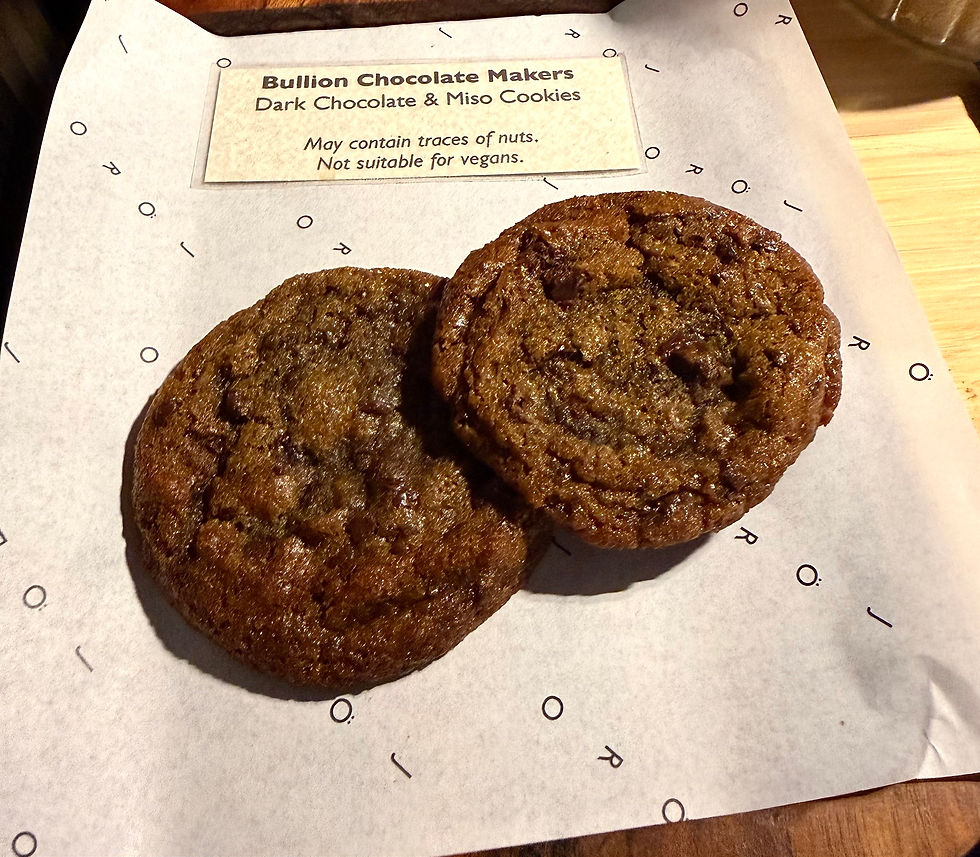
I'm sure you will agree that boutique hotel bedrooms have become rather predictable. Pale walls, clever lighting, a rainfall shower and a coffee machine have become the modern equivalent of floral wallpaper and trouser presses. JÖRO's rooms borrow the same Scandinavian restraint but avoid looking as though they've been assembled from a luxury interiors catalogue. There was space to breathe, proper seating rather than a token chair in the corner, soft timber, calming neutral colours and everything we'd need if we'd decided to stay for several days instead of one. Waiting on the table were two dark chocolate and miso cookies from Bullion Chocolate Makers. They survived roughly three minutes.
We were a few minutes early for dinner so made our way to the terrace first. A glass of chilled Nyetimber Classic Cuvée arrived, the evening sun bounced off the old mill buildings and for a few moments my husband and I found ourselves trying to work out why it all felt strangely familiar. Then he said it. "It's like the Viaduct." Instantly I knew what he meant. We spent fourteen years living in New Zealand and there was something about sitting outside with sparkling wine, watching people drift between restaurant and terrace, that transported us straight back to summer evenings in Auckland. Then I looked beyond the courtyard, spotted a perfectly ordinary red-brick house on the neighbouring estate and smiled to myself. We were most definitely still in Sheffield. And I couldn't have been happier.
I always think that staying overnight changes your mindset. Dinner stops being the main event and becomes part of a much longer evening. Nobody glances at the time. Nobody is having to keep a mental tally of how much wine is ok when they've still got to negotiate the Snake Pass afterwards. We sipped our Nyetimber and sat outside chatting and people watching before a waiter in immaculate braces appeared to collect us.
The short walk to our table almost deserved its own round of applause. Cabinets filled with ageing cuts of beef gave way to towering wine fridges, shelves of olive oils and vinegars from across Europe and, naturally, a Michelin Man keeping watch over it all. Then the restaurant opened up. Almost half of the dining room belongs to the kitchen, so wherever you sit, your attention is drawn towards the chefs. The front-row tables cost an extra £50, but after spending the evening there, I'd argue there isn't a disappointing seat in the house.

Open kitchens have become fashionable over the past decade, although they're often treated as theatre. Flames leap into the air. Somebody shouts. Diners gasp appreciatively. JÖRO couldn't have been more different. For the next four hours I found myself repeatedly losing the thread of my own conversations because I was watching the choreography unfolding in front of me. Television has taught us to imagine Michelin kitchens as pressure cookers full of shouted expletives and chefs whose blood pressure probably ought to be monitored professionally. This kitchen barely seemed to make a sound. There were occasional bursts of flame but otherwise every movement felt calm and deliberate.
At the centre stood head chef Alex Bruno, still only thirty years old, working the pass with extraordinary focus while his small team moved around him with precision. Watching them plate dish after dish became every bit as fascinating as eating it. Luke French, JÖRO's co-owner and executive chef, wasn't observing from the sidelines either. Throughout the evening he was cooking, plating and moving effortlessly between stations alongside the rest of the brigade. At this level, he could probably step back and leave them to it, but he clearly still loves being in the kitchen.
The menu revealed itself in a series of small surprises. We opted for the ten-course tasting menu, adding both the caviar supplement and the optional cheese course because you only live once. And if you've already committed to ten courses, what's another one between friends?
The first dishes more than justified the decision. A succession of delicious bites arrived, including a delicate tartelette, a crisp croustade and a pineapple palate cleanser that did exactly what it was supposed to before the meal gathered pace. Our favourite, though, was the Summerfield Pain Suisse. It sounds rather restrained when written down: laminated pastry, black truffle butter, warm cheese custard and fresh black truffle. Reading the ingredients doesn't begin to explain the experience of eating it. The pastry shattered into dozens of delicate layers before giving way to molten cheese custard, rich enough to feel gloriously indulgent yet never heavy.
My husband described it as "the best cheese pie you've ever eaten, only on steroids." I knew exactly what he meant. It reminded him of one of his favourite childhood treats from family holidays in Corfu, and I loved that we'd barely begun the meal before it was already sparking memories. I briefly considered asking whether they sold the Pain Suisse by the dozen.

The accompanying sake also dismantled one of my own assumptions. I'd never tried it before, largely because I'd imagined it would be fiery and overpowering. Instead it was light, elegant and wonderfully paired with the dish. That became something of a theme throughout the evening. The drinks flight wasn't simply there to accompany the food; it explained it. Our sommelier became one of the stars of the night. Rather than standing formally beside the table delivering rehearsed descriptions, he'd kneel down beside us before each course, introducing the next drink almost as though he'd joined us for dinner. We talked about Riesling, cider, sake and the unexpected joy of discovering something completely new. At one point we realised we'd spent significant parts of our lives at opposite ends of the same wine-producing world. He'd grown up in Adelaide. We'd lived in New Zealand for fourteen years. Conversation drifted from European vineyards to supermarket shelves stacked floor to ceiling with Australasian wine, before gently returning to whatever glass had just appeared in front of us.

Several dishes will stay with me for a very long time. The Chalk Stream trout captured everything we'd been watching in the kitchen. There were no unnecessary flourishes, just immaculate cooking. The coral-pink flesh beneath crispy skin was soft enough to cut with the edge of a spoon, while a bright herb beurre blanc lifted every bite without competing for attention. It wasn't trying to steal the show. It just reminded us how satisfying perfectly executed simplicity can be.

The silky chawanmushi introduced us to an entirely different texture, all savoury umami comfort. My husband fell hopelessly in love with the warm celeriac course, marvelling at how something so apparently humble could deliver so many different flavours in a single mouthful. For me though, it was the Isle of Skye scallop that stole the evening. Sweet, perfectly caramelised and paired with strawberries and a surprising warmth from chilli that flirted with becoming too much before retreating at precisely the right moment, it came alongside another glass of Nyetimber, which helped cool the tongue. I could have eaten another serving of it. It was so much fun - unexpected, a little bit mad but totally worked.

The Yorkshire pork 'Thai BBQ' managed something equally impressive. Marinated in Thai green shio koji before being grilled and rested in fragranced pork fat, it was accompanied by impossibly soft Japanese milk bread, whipped cultured butter and a sharp rhubarb relish that sliced through the richness without ever overpowering it. It was comforting and unfamiliar all at once. That's perhaps what impressed us most about JÖRO. It isn't interested in novelty for novelty's sake. It borrows ideas from wherever they make sense, creating food that somehow feels entirely coherent despite drawing inspiration from opposite sides of the world.

By dessert we'd progressed beyond hunger into something approaching professional determination, yet somehow found room for the sweet end of the menu, including a fragrant Thai jasmine rice koji mousse, caramelised butter parfait, nashi pear, yuzu and soy caramel.

Sometime while we were downstairs, breakfast had been delivered to our room ready for the following morning. Fresh pastries, charcuterie, smoked trout pâté, yoghurt, fruit and sourdough from Crumb Bakery waited patiently while we enjoyed a surprisingly good night's sleep after one of the longest dinners we'd had in years. Before heading home we wandered downstairs one final time where overnight guests are treated to complimentary hot drinks from the café. After ten courses and a generous wine flight, an excellent white felt almost medicinal. It was so good I ordered a second one to take away.
Less than an hour later we were back in the Peak District, coffee in hand, talking less about individual dishes than the evening as a whole. The calmness of the kitchen. The warmth of the service. The conversations over unfamiliar wines. The feeling that we'd travelled much further than forty-five minutes up the A61.

It's easy to write about Michelin stars because they're tangible. You can count them. Frame them. Put them on the door. They're also slightly beside the point. What JÖRO offers isn't simply incredible cooking, although it unquestionably does that. It offers the rare feeling that you've stepped completely outside your everyday life without travelling very far at all. We showed up expecting one memorable dinner. We left having discovered an entirely different style of dining and wondering why we'd overlooked it for so long.
For those of us lucky enough to call the Peak District home, that's perhaps the greatest luxury of all. We often convince ourselves that remarkable food demands a passport, or at least a train to London. Sometimes all it takes is forty-five minutes up the road.


